前言
在上一篇文章《文心4.5開源大模型的使用和部署》已經介紹瞭如何使用fastdeploy部署文心4.5開源大模型的,並且簡單調用了接口,本篇文章來介紹Android如何調用這個部署的接口,並實現對話。
部署
- 首先還是需要下載要部署的文心模型,之前爲了演示我使用了一個比較小的模型,現在部署上我使用更大的模型
ERNIE-4.5-21B-A3B-Paddle。
aistudio download --model PaddlePaddle/ERNIE-4.5-21B-A3B-Paddle --local_dir ./models/ERNIE-4.5-21B-A3B-Paddle/
- 啓動fastdeploy服務,要留意這個
8180端口號,下面會使用到,注意爲了節省顯存,這次量化我使用了是wint4方法。
python -m fastdeploy.entrypoints.openai.api_server \
       --model ./models/ERNIE-4.5-21B-A3B-Paddle/ \
       --port 8180 \
       --quantization wint4 \
       --max-model-len 32768 \
       --max-num-seqs 32
- 寫個Python腳本作爲中轉和記錄對話歷史數據,首先寫一個LLM類作爲整體的工具調用。
class LLM:
    def __init__(self, host, port):
        self.client = openai.Client(base_url=f"http://{host}:{port}/v1", api_key="null")
        self.system_prompt = {"role": "system", "content": "You are a helpful assistant."}
        self.histories: Dict[str, list] = {}
        self.base_prompt = {"role": "user", "content": "請扮演一個AI助手角色,你的名字文心4.5。"}
        self.base_prompt_res = {"role": "assistant", "content": "好的,我已經記住了。您有什麼問題想要問我嗎?"}

    # 流式回覆
    def generate_stream(self, prompt, max_length=8192, top_p=0.8, temperature=0.95, session_id=None):
        # 如果session_id存在之前的歷史,則獲取history
        if session_id and session_id in self.histories.keys():
            history = self.histories[session_id]
        else:
            # 否則創建新的session_id
            session_id = str(uuid.uuid4()).replace('-', '')
            history = [self.system_prompt, self.base_prompt, self.base_prompt_res]
        history.append({"role": "user", "content": prompt})
        print(f"歷史紀錄:{history}")
        print("=" * 70)
        print(f"【用戶提問】:{prompt}")
        all_output = ""
        response = self.client.chat.completions.create(model="null",
                                                       messages=history,
                                                       max_tokens=max_length,
                                                       temperature=temperature,
                                                       top_p=top_p,
                                                       stream=True)
        for chunk in response:
            if chunk.choices[0].delta:
                output = chunk.choices[0].delta.content
                if output == "": continue
                ret = {"response": output, "code": 0, "session_id": session_id}
                all_output += output
                # 更新history
                history[-1] = {"role": "assistant", "content": all_output}
                self.histories[session_id] = history
                # 返回json格式的字節
                yield json.dumps(ret).encode() + b"\0"
- 啓動自己的服務接口,注意這幾個參數,
host和port參數值本身服務暴露給Android調用的,fastdeploy_host和fastdeploy_port是fastdeploy部署的接口,也就是第二步設置的端口號及其部署所在的服務器IP。執行這個腳本就可以啓動服務了,接下來就等Android調用了。
app = FastAPI()

@app.post("/llm")
async def api_llm(request: Request):
    params = await request.json()

    generator = model.generate_stream(**params)
    background_tasks = BackgroundTasks()
    return StreamingResponse(generator, background=background_tasks)


if __name__ == "__main__":
    parser = argparse.ArgumentParser()
    parser.add_argument("--host", type=str, default="0.0.0.0")
    parser.add_argument("--port", type=int, default=8000)
    parser.add_argument("--fastdeploy_host", type=str, default="127.0.0.1")
    parser.add_argument("--fastdeploy_port", type=int, default=8180)
    args = parser.parse_args()
    model = LLM(host=args.fastdeploy_host, port=args.fastdeploy_port)
    # 啓動服務
    uvicorn.run(app, host=args.host, port=args.port)
Android調用
在Android中,核心代碼如下,其中CHAT_HOST的值爲http://192.168.1.100:8000,其中IP是開發者部署上面服務的服務器IP,端口是port指定的端口號。下面的代碼。主要通過即時從服務器接收返回的數據並解析,同時顯示在頁面上,實現了打字的效果。
// 發送文本結果到大語言模型接口
private void sendChat(String text) {
    if (text.isEmpty()) {
        return;
    }
    runOnUiThread(() -> sendBtn.setEnabled(false));
    // 請求的參數
    Map<String, String> map = new HashMap<>();
    map.put("prompt", text);
    if (session_id != null) {
        map.put("session_id", session_id);
    }
    JSONObject jsonObject = new JSONObject(map);
    try {
        jsonObject.put("top_p", 0.8);
        jsonObject.put("temperature", 0.95);
    } catch (JSONException e) {
        throw new RuntimeException(e);
    }
    RequestBody requestBodyJson = RequestBody.create(jsonObject.toString(),
            MediaType.parse("application/json; charset=utf-8"));
    Request request = new Request.Builder()
            .url(CHAT_HOST + "/llm")
            .post(requestBodyJson)
            .build();
    OkHttpClient client = new OkHttpClient.Builder()
            .connectTimeout(30, TimeUnit.SECONDS)//設置連接超時時間
            .readTimeout(30, TimeUnit.SECONDS)//設置讀取超時時間
            .build();
    try {
        Response response = client.newCall(request).execute();
        ResponseBody responseBody = response.body();
        // 接收流式結果
        InputStream inputStream = responseBody.byteStream();
        byte[] buffer = new byte[2048];
        int len;
        StringBuilder all_response = new StringBuilder();
        StringBuilder sb = new StringBuilder();
        while ((len = inputStream.read(buffer)) != -1) {
            try {
                // 處理讀取到的數據
                String data = new String(buffer, 0, len - 1, StandardCharsets.UTF_8);
                sb.append(data);
                byte lastBuffer = buffer[len - 2];
                buffer = new byte[2048];
                if (lastBuffer != 0x7d) {
                    continue;
                }
                data = sb.toString();
                sb = new StringBuilder();
                Log.d(TAG, data);
                JSONObject resultJson = new JSONObject(data);
                int code = resultJson.getInt("code");
                String resp = resultJson.getString("response");
                all_response.append(resp);
                session_id = resultJson.getString("session_id");
                runOnUiThread(() -> {
                    Msg lastMsg = mMsgList.get(mMsgList.size() - 1);
                    if (lastMsg.getType() == Msg.TYPE_RECEIVED) {
                        mMsgList.get(mMsgList.size() - 1).setContent(all_response.toString());
                        // 有新消息時,刷新RecyclerView中的顯示
                        mAdapter.notifyItemChanged(mMsgList.size() - 1);
                    } else {
                        mMsgList.add(new Msg(resp, Msg.TYPE_RECEIVED));
                        // 有新消息時,刷新RecyclerView中的顯示
                        mAdapter.notifyItemInserted(mMsgList.size() - 1);
                    }
                    // 將RecyclerView定位到最後一行
                    mRecyclerView.scrollToPosition(mMsgList.size() - 1);
                });
            } catch (JSONException e) {
                e.printStackTrace();
            }
        }
        inputStream.close();
        response.close();
    } catch (IOException e) {
        e.printStackTrace();
    }
    runOnUiThread(() -> sendBtn.setEnabled(true));
}
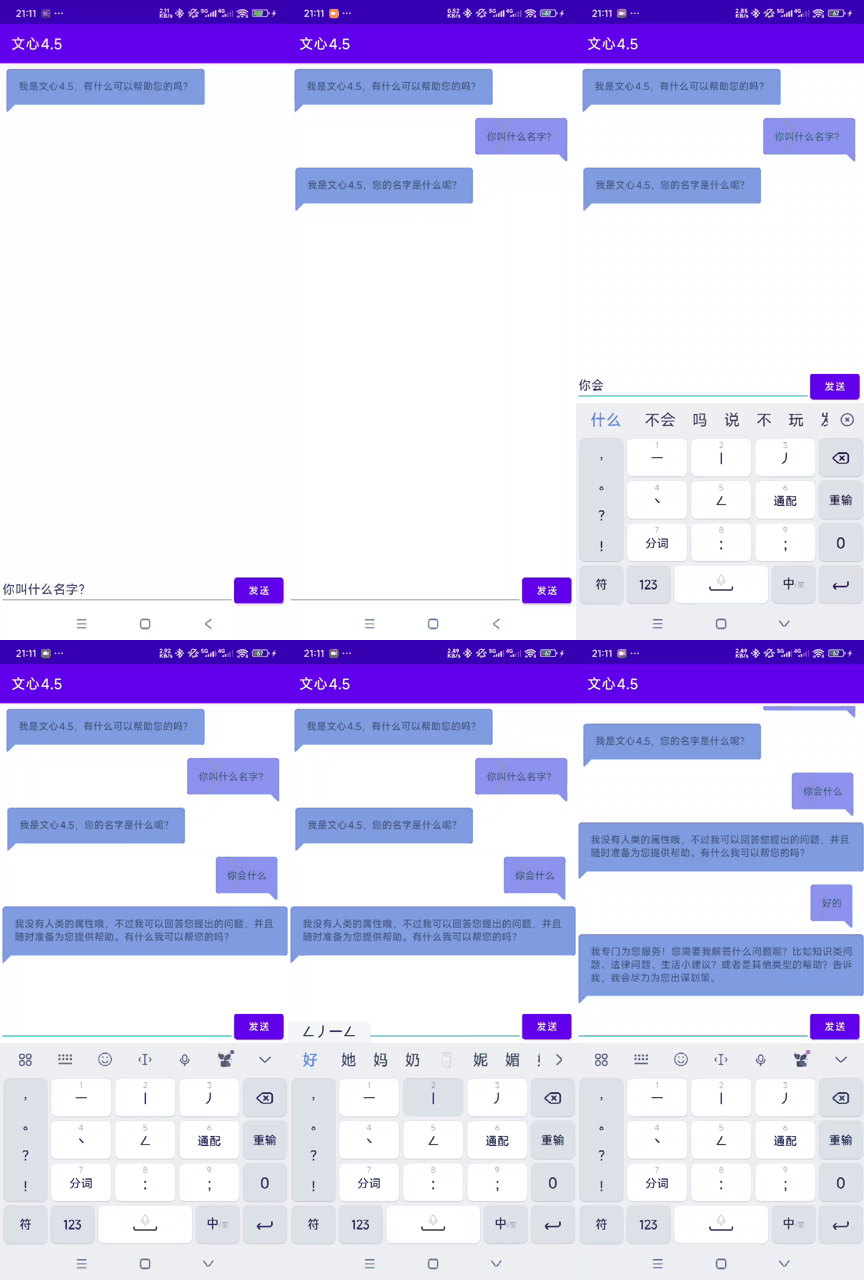
效果圖如下:
獲取源碼
在公衆號中回覆【部署文心4.5開源模型給Android設備調用】即可獲取源碼。